
Why “Good Items” Are the Hardest to Declutter (And What You’re Actually Deciding when Faced with Decluttering Overwhelm)

Struggling to declutter “good” items? Discover why they keep you stuck—and the one decision that makes letting go finally feel clear.

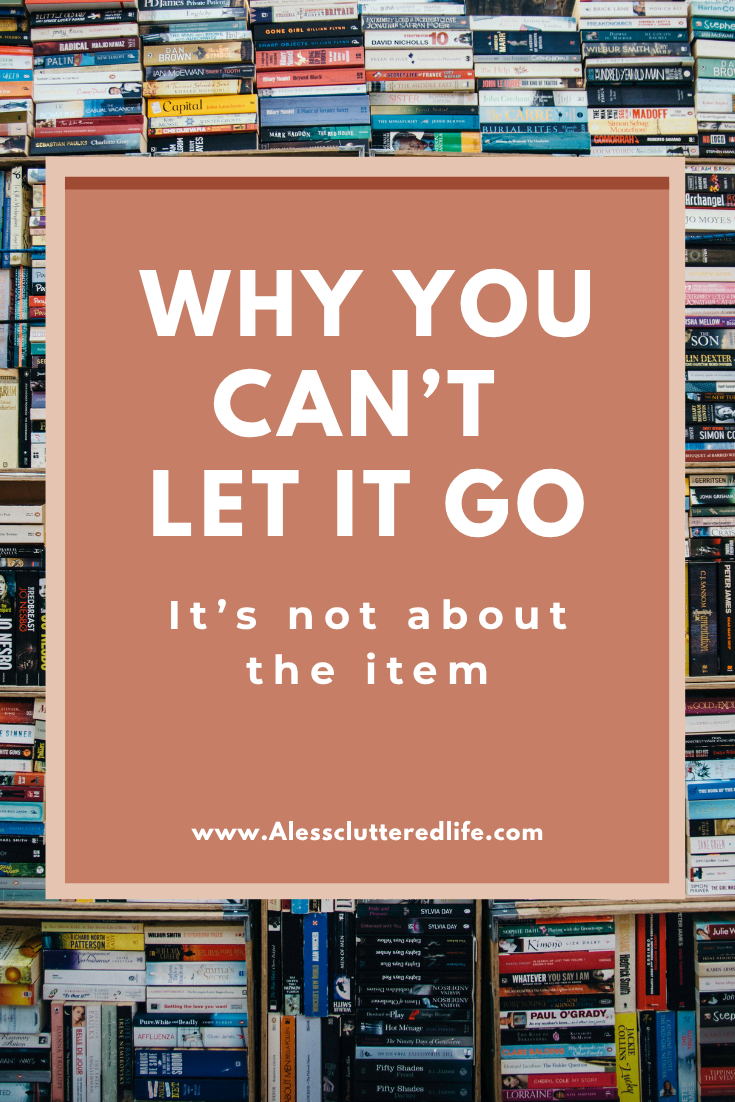
There was a time in my life when buying books felt like progress, not just something I enjoyed. It wasn’t only about reading them. It was about owning them, collecting them, building something meaningful over time.
I bought books from local bookstores, monthly book clubs, and every author I liked. If I enjoyed one book, I assumed I would eventually read everything they had written. Over time, I bought far more books than I ever actually read.
When my shelves filled up, I boxed them and stacked them neatly in a corner. And surprisingly, that didn’t bother me in the slightest. Because I had a plan for all of it.
Someday, I would live in a home with a personal library. And if that was the future I was building toward, then keeping those books made sense.
When “Someday” Quietly Turns into a Burden
Over time, something subtle began to change in the way those books felt. They no longer felt exciting or full of possibility like they once had. Instead, they began to feel heavy in a way that was difficult to explain.
They weren’t just books anymore. They had quietly become commitments I hadn’t followed through on.
Every unread title carried the same quiet message in the background: You said you were going to read this. Every so often, I would try to catch up and make progress. I would read faster, push through books I didn’t enjoy, and try to justify the past decision. And eventually, I saw something clearly that I hadn’t noticed before.
I had taken something I loved—reading—and turned it into an obligation.
Why “Good Items” Are So Difficult to Let Go
If something is broken or unusable, the decision is usually straightforward and immediate. It has already reached its natural end, so there’s very little left to consider. But “good” items operate very differently in your mind.
They still hold potential, usefulness, and possibility, even if unused for years. And that possibility creates a subtle but persistent kind of pressure.
You start thinking:
I should use this at some point.
Someone else could benefit from this.
It would be wasteful to let this go.
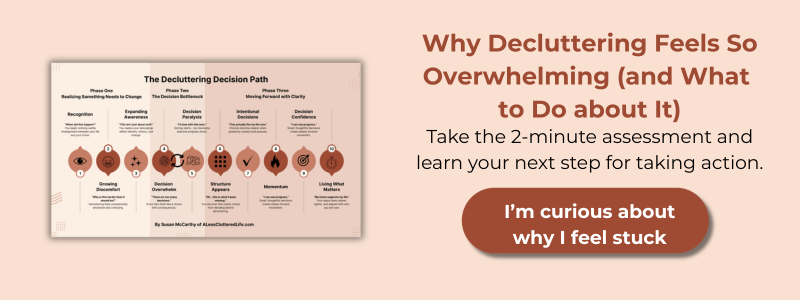
Instead of one clear decision, you create multiple smaller decisions layered together. And that is exactly where decision overwhelm begins to take hold. It’s not about having too many things in your home. It’s about carrying too many unresolved decisions at the same time. Welcome to Stage Four of the Decluttering Decision Path: Decision Overwhelm.
What You’re Actually Trying to Protect
At first glance, this can look like a practical or logistical problem to solve. But underneath that surface, something else is happening entirely. You’re trying to be responsible, thoughtful, and careful with your choices. You want to make the right decision and avoid unnecessary waste or regret.
You also want to make sure the item is appreciated and used properly. Without realizing it, you’ve taken on a specific role in the process.
You’ve become the steward of the item and its potential future.
And once you take on that responsibility, letting go starts to feel risky. Because the moment it leaves your hands, you lose control over what happens next.
The Hidden Truth: It Was Never About the Item
Those books were never just books sitting quietly on a shelf or in a box.
They represented something much larger and more personal to me at the time.
They represented:
A future version of myself I believed I was becoming.
A home I imagined I would eventually create.
A way of living that felt aligned with who I wanted to be.
Letting those books go wasn’t simply about creating more physical space. It required acknowledging something deeper and more uncomfortable than expected. That’s not how I live now. And it’s not how I’m going to live moving forward.
That is the real decision you are being asked to make.
Why “Still Usable” Keeps You Stuck Longer
A broken item has no future, which makes the decision relatively simple. (Although, not always. Particularly if you have a "I can fix it" mindset.") But a usable item always carries a sense of possibility with it.
Because of that, your mind continues to revisit the same questions repeatedly:
Should I use this again someday?
Could I return to that version of my life?
But here is what is already true, whether you’ve named it or not. You are not choosing between using it and letting it go. You have already stopped using it. Now you are deciding whether you are willing to acknowledge that reality.
The Decision That Keeps Getting Skipped
Most people move quickly into logistical questions without realizing it.
They start asking:
Where should this go next?
Who would appreciate this more than I do?
Should I donate, sell, or give it away?
But those are all second-level decisions that depend on something else. The first decision was never clearly made. Does this still fit the life I am living now?
Without answering that question first, everything that follows feels heavier. You end up trying to take action without having clarity to support it.
How to Reduce Decluttering Overwhelm Before You Even Begin
You don’t need more motivation, inspiration, or momentum to get started. What you actually need is a simple structure that removes friction.
Before you begin decluttering, decide your exit paths in advance:
What donation options feel acceptable and realistic for you.
What level of effort you are truly willing to make.
Where different categories of items will go when released.
This preparation does something very important behind the scenes. It removes unnecessary decisions in the moment and prevents mental spirals. So when you decide something no longer fits your life… You already know exactly what happens next without hesitation. There is no delay, no second-guessing, and no revisiting the same decision again.
The Shift That Changes Everything
When I finally donated those books, I didn’t solve every possible outcome. I didn’t know who would read them or how they would be used later.I didn’t ensure that every book found the perfect next owner.
But I made one clear, grounded decision that guided everything else. They no longer fit my life. And that decision, on its own, was enough to move forward.
What You Are Actually Responsible For
This is where everything begins to feel lighter and more manageable. You are not responsible for finding the perfect outcome for every item. You are not responsible for ensuring nothing ever goes to waste. You are not responsible for managing the full future of what you release. You are responsible for one thing, and one thing only.
Deciding if it belongs in your life now. That is where your responsibility begins and ends.
A Simple Place to Start
If you feel stuck when facing “good” items, begin with something small. Choose one item and bring your attention to it without rushing ahead. Then ask yourself one clear and grounded question: Does this still fit the life I am living now?
Not the life you planned years ago. Not the version of life you thought you would eventually grow into. The life you are actually living today, as it exists right now. Make that decision first, before thinking about anything else. Everything becomes simpler, clearer, and more manageable after that point.
Takeaways on Decision Overwhelm and "Good Things"
Decluttering is not about getting rid of as much as possible. It is about learning how to make clear, honest decisions. And the hardest decisions are rarely about the object itself. They are about whether it still belongs in the life you are living now.
Start there.
This is where clarity begins. This is where forward movement starts. This is where postponing ends.


Comments