
Why Decluttering Doesn't Limit Your Life - It Frees You to Live What Matters
Think decluttering means giving up possibilities? Discover why intentional decluttering decisions create more time, energy, and room for what matters most.


Many women hesitate to declutter because they're afraid their lives will somehow become smaller. Maybe it's the box of craft supplies you've been saving for retirement. Maybe it's the skis you haven't used in years. Maybe it's the fabric for quilts you imagined making someday or the stack of books you fully intended to read.
You look at those belongings and wonder: What if I want this later?
It's a reasonable question. But I'd like to offer you a different one. What if keeping everything isn't expanding your life? What if it's quietly limiting it?
That question sits at the heart of how I think about decluttering. It also connects two ideas that shape everything I teach:
Decision-Making Before Decluttering
Living What Matters
At first glance, those might seem like separate concepts. One sounds like the process and the other sounds like the destination. But I've come to realize they're inseparable. Because Living What Matters doesn't begin after your home is decluttered. It begins the moment you start making intentional decisions.
The Biggest Misconception About Decluttering
One of the biggest misconceptions about decluttering is that it's an act of elimination. People imagine they'll end up with:
Less stuff.
Less possibility.
Fewer choices.
A smaller life.
When every decluttering decision feels like you're giving something up, it's no wonder those decisions become difficult.
But what if we've been looking at decluttering the wrong way? Instead of asking what you're losing, try asking what you're investing in. Every decision you make is an investment -
An investment in your future.
An investment in how you'll spend your time.
An investment in your energy.
An investment in your attention.
An investment in the people and activities that matter most.
When we think about decluttering as elimination, our attention stays fixed on what's leaving. When we think about it as an investment, we begin noticing what we're making room for. That shift changes everything. Every decluttering decision isn't simply about removing something from your home. It's also about choosing what you want to grow in your life.

When Possibility Becomes Obligation
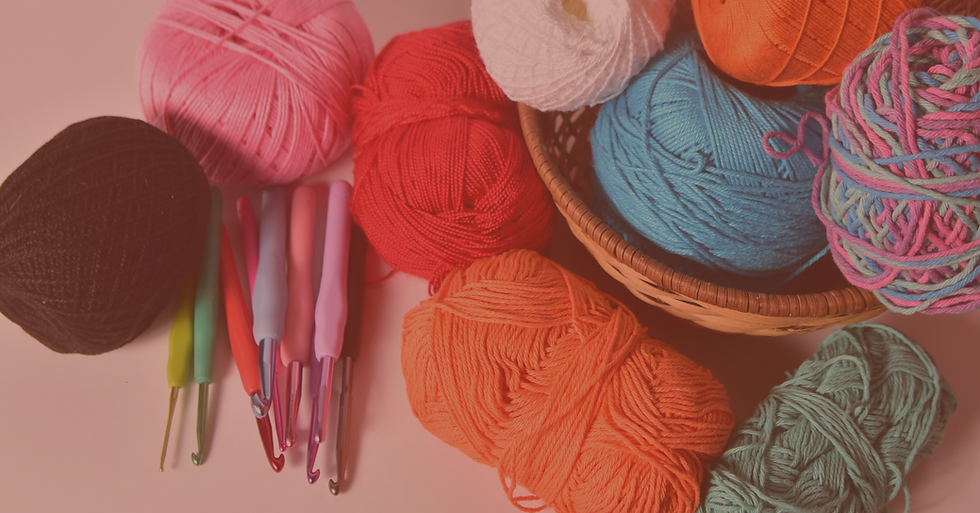
I learned this lesson in my own craft space. For many years I loved arts and crafts. Not just one craft. Almost all of them. I taught after-school art classes and summer camps for nearly twenty-five years. I attended workshops, joined creative groups, and accumulated supplies for watercolor painting, acrylic painting, charcoal, knitting, crochet, quilling, card making, felting, origami, paper flowers—and probably a few others I've forgotten.
At first, those bins of supplies represented possibility. I could create anything. I could try anything. Every project felt like an opportunity waiting for me. But over time, something changed. Instead of representing possibility, those supplies began creating obligation.
I'd walk into my craft room and think: "I really should use those watercolor pencils." "I haven't done quilling in over a year." "Maybe I should knit today instead." I wasn't choosing projects because I wanted to. I was choosing them because I felt guilty that I owned the supplies.
Eventually, creativity stopped feeling creative. It became another obligation on my to-do list. Ironically, I found myself avoiding my craft supplies altogether.

The Question That Changed Everything
Eventually I stopped asking: "What supplies do I own?" Instead I asked: "What do I genuinely enjoy creating now?" That one question changed everything. As I answered honestly, I began letting go of supplies for crafts that no longer fit my life. And something unexpected happened.
I didn't feel deprived. I felt relieved. Each intentional decision removed another future debate. Before, every evening started with questions. Should I rug hook? Should I embroider? Should I crochet? Should I paint?
Every creative session required another round of decision-making. Once I intentionally let go of the hobbies I'd moved beyond, those conversations disappeared. The decisions had already been made. Now I simply reach for my yarn. I have more room to store the supplies I actually use. More time to enjoy them. More energy because I'm no longer negotiating with myself.
And here's what surprised me most. I create far more now than I did when I owned supplies for every craft imaginable. Not because I own more. Because I own less that competes for my attention. That's what I mean when I say decluttering is an investment. Every intentional decision increased the return I receive from the activities I truly enjoy.
The Hidden Cost of Postponed Decisions
This principle reaches far beyond craft supplies. Many of us are holding onto belongings that represent possibilities we no longer intend to pursue. We tell ourselves they're there "just in case." But "just in case" often becomes an ongoing conversation.
Every postponed decision asks you to make the same decision again tomorrow. And next month. And next year.
Those unfinished decisions quietly consume mental energy. Not because they're difficult every day. Because they never end. One intentional decision, however, pays you back again and again. Once you've decided, the debate is over. That's an incredible return on your investment.
When Life Changes Without Your Permission
Sometimes the changes aren't ones we chose. Maybe you loved skiing until a knee injury made it impossible. Maybe quilting was part of your life before you became a caregiver. Maybe retirement didn't unfold the way you imagined. Those losses are real. They deserve to be acknowledged. But there's an important distinction.
Life may change our circumstances. We still get to decide how we respond. Keeping the skis in the garage doesn't mean you're still skiing. Keeping the quilting fabric doesn't create more time to quilt. Sometimes the belongings remain long after the life they represented has changed. Making an intentional decision about those belongings isn't giving up. It's reclaiming your agency.
It's saying: "I'm acknowledging the life I'm living today." "I'm choosing where I want my time, energy, attention, and space to go from here." This response feels purposeful.
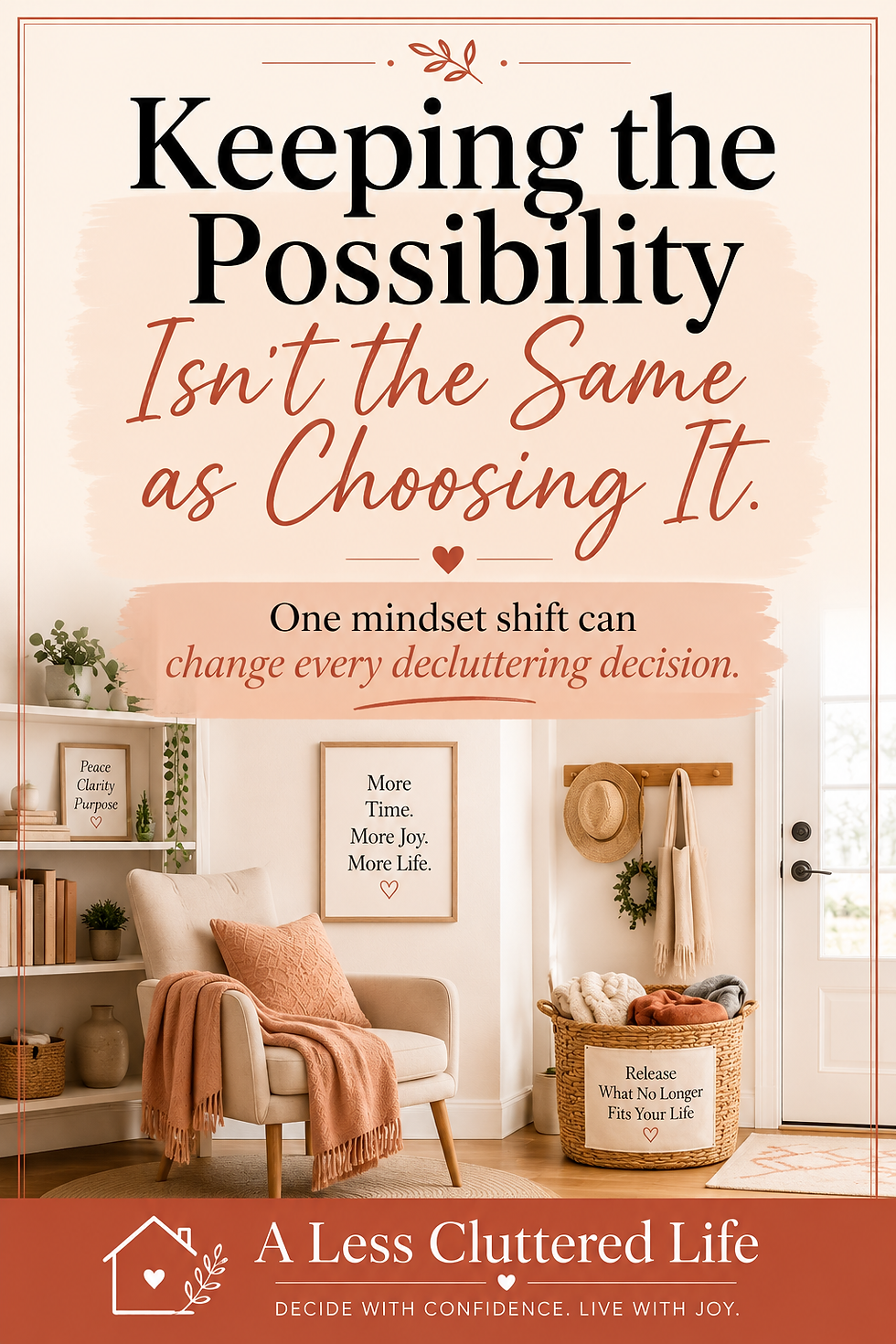
Keeping the Possibility Isn't the Same as Choosing It
This sentence has stayed with me throughout my own decluttering journey: Keeping the possibility isn't the same as choosing it. Many of us believe we're preserving options. But are we? Or are we preserving reminders of decisions we haven't made?
We often assume more possibilities create more freedom. I've found the opposite to be true. Too many possibilities compete for our attention. They divide our energy. They create guilt. They make it harder to fully enjoy the things we genuinely love.
When you intentionally choose fewer possibilities, you often experience:
More participation.
More engagement.
More peace.
More joy.
More life.
That's the freedom thoughtful decluttering creates.
Living What Matters Starts Much Earlier Than You Think
When I first developed the Decluttering Decision Path, I described Living What Matters as the final stage. I still believe it's the outcome. But I've also realized something important. It begins much earlier than that.
It begins with the very first intentional decision. Every decision is a vote for the life you're building. Every decision asks: "Does this belong in the future I'm creating?"
Some decisions will involve letting something go. Every decision also involves choosing something else. Choosing more evenings knitting instead of feeling guilty about six hobbies you no longer enjoy. Choosing more time with your grandchildren. Choosing room for the interests that still light you up. Choosing peace instead of postponed decisions. Choosing a home that supports the life you're actually living.
That is what Living What Matters looks like. Not because your house is perfect. Not because every room is finished. But because your home increasingly reflects your current life instead of preserving every version of your past.
Your Next Decluttering Decision
If you've been afraid that decluttering will limit your life, consider the possibility that the opposite may be true. Perhaps the belongings you're afraid to release aren't expanding your life anymore. Perhaps they're quietly competing with what matters most. Decluttering isn't simply about eliminating things. It's about investing in your future.
Every thoughtful decision is an investment in:
More time.
More energy.
More attention.
More participation.
More life.
Because making decluttering decisions is freeing - not limiting. Every intentional decision creates more room for what matters now. This is where postponing ends.



Comments